Table of Contents
- Why Winter Sunroom Projects Make Sense Now
- Installing Sunspace Sunshades for Light Control and Privacy
- Enhancing Winter Lighting for Short Days
- Creating a Reading or Relaxation Nook
-
Adding DIY Décor and Indoor Plants
- Creating a Thriving Indoor Garden in Your Sunroom
- Textiles Warm Up Your Sunroom
- Wall Décor and Ambient Accents for a Cozy Sunroom
-
Maximizing Natural Light During Short Winter Days
- Keep Glass Surfaces Clean for Optimal Light Transmission
- Use Light-Coloured Surfaces to Reflect Daylight
- Enhance Brightness with Strategic Mirror Placement
- Reduce Window Obstructions in Winter
- Add Reflective Décor to Brighten Dark Areas
- Trim Outdoor Vegetation Blocking Sunlight
- Planning Ahead for Spring Without Major Renovations
- Frequently Asked Questions
Why Winter Sunroom Projects Make Sense Now
Additionally, winter sunrooms often reveal comfort gaps that go unnoticed during summer. Cold drafts, insufficient lighting, and bare spaces become obvious when temperatures drop. Addressing these issues now means you’ll maximize your sunroom’s usability throughout the entire year, not just during peak seasons.

Installing Sunspace Sunshades for Light Control and Privacy
The sunshades are particularly valuable for west-facing sunrooms in Alberta and BC. They provide additional shade from intense afternoon sun while reducing glare during the low winter sun angles. This makes your sunroom more comfortable for reading, working, or relaxing without the harsh brightness that often occurs during winter when the sun sits lower in the sky.
Sunspace Sunshades come with openness factors of 3% or 5%, allowing you to control how much light filters through. The system operates effortlessly, raising and lowering with simple mechanisms that don’t require motorization or electrical work. This simplicity makes them ideal winter projects that homeowners can tackle themselves or have installed quickly by professionals.
The custom fit ensures a clean, seamless appearance that integrates with your existing sunroom design. Available in multiple colours, you can select options that complement your interior décor. The shades soften and diffuse natural light rather than blocking it completely, maintaining the bright, airy feeling that makes sunrooms appealing while reducing uncomfortable brightness.

Enhancing Winter Lighting for Short Days
Layered lighting creates the most versatile and comfortable environment. Start with ambient lighting that provides general illumination throughout the space. Floor lamps with adjustable brightness work well in sunrooms because they don’t require ceiling modifications.
Add task lighting in areas where you read, work, or pursue hobbies. Adjustable desk lamps or wall-mounted reading lights allow you to direct light exactly where needed. LED bulbs offer the best value for sunroom applications because they generate minimal heat, last significantly longer than traditional bulbs, and consume less electricity during extended winter use.
Consider warm colour temperatures between 2700K and 3000K for evening lighting. These tones create a cozy atmosphere that contrasts with the cold outdoor environment. Cooler temperatures around 4000K work better during daytime hours, mimicking natural daylight and helping maintain alertness and energy levels.
String lights or rope lighting along ceiling perimeters add decorative ambiance without overwhelming the space. These options prove especially effective in sunrooms where you want to create a relaxed evening atmosphere without harsh overhead lighting. Battery-operated or plug-in versions require no electrical work, making them simple weekend additions.
Table lamps positioned on side tables or shelves add warmth and create multiple light sources throughout the room. This prevents the single-source lighting effect that can feel stark and uninviting. Multiple smaller light sources create depth and make the space feel more finished and intentional.
Creating a Reading or Relaxation Nook
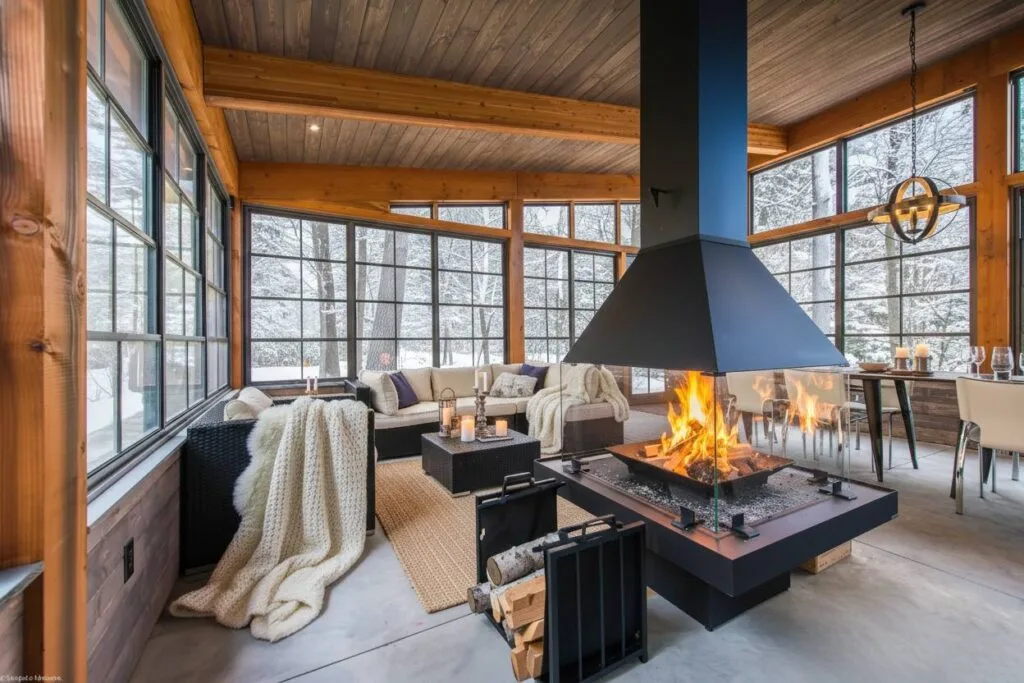
Start with comfortable seating that suits winter use. We recommend upholstered chairs or small sofas with removable, washable covers rather than outdoor furniture designed for summer. Add throw blankets in natural fibers like wool or fleece for extra warmth. These textiles also absorb sound, making the space feel more intimate and less echo-prone than glass-surrounded areas typically feel.
Position your nook to maximize morning or afternoon sunlight, depending on when you’ll use the space most frequently. East-facing windows capture morning sun, while south and west exposures provide warmth during afternoon hours. Even on cloudy winter days, proximity to windows offers more natural light than interior rooms receive.
Small side tables provide convenient surfaces for books, beverages, or electronic devices. Choose weather-resistant materials if your sunroom experiences temperature fluctuations or condensation issues. Metal, sealed wood, or synthetic materials hold up better than unsealed wood or fabric-covered pieces in spaces that may not maintain consistent indoor temperatures.

Bookshelves or storage cubes keep reading materials, craft supplies, or hobby items organized and accessible. This prevents the need to retrieve items from other parts of your home, making your sunroom nook genuinely self-sufficient. Closed storage options protect contents from dust and temperature variations.
Adding DIY Décor and Indoor Plants

Creating a Thriving Indoor Garden in Your Sunroom
Ferns and peace lilies work well in more humid sunrooms, while succulents and cacti prefer drier conditions. Group plants together to create visual interest and maintain higher humidity levels around the plants themselves. Elevate smaller plants on stands or shelves to create depth and make them visible from seating areas.
Monitor plants more carefully during winter months. Most slow their growth significantly in colder temperatures and lower light, requiring less frequent watering. Overwatering becomes a common problem in winter sunrooms because soil takes longer to dry out. Check soil moisture before watering rather than following a fixed schedule.
Textiles Warm Up Your Sunroom
Cushions and throw pillows in warmer colours like rust, burgundy, deep green, or golden yellow create visual warmth that counteracts the cold outdoor views. These can be swapped out seasonally, making it easy to refresh your sunroom’s appearance without permanent changes. Removable covers allow washing, which proves important in sunrooms where dust and pollen can accumulate.
Wall Décor and Ambient Accents for a Cozy Sunroom
Candles or battery-operated flameless candles add ambient warmth and create a cozy evening atmosphere. Real candles should be used cautiously in sunrooms with temperature fluctuations, as extreme cold can affect how they burn. Flameless options provide similar visual warmth without fire risk or concerns about drafts.

Maximizing Natural Light During Short Winter Days
Western Canadian winters offer limited daylight hours, making it essential to capture and distribute whatever natural light enters your sunroom. Simple adjustments help maximize light penetration and reflection throughout the space.
Keep Glass Surfaces Clean for Optimal Light Transmission
Use Light-Coloured Surfaces to Reflect Daylight

Enhance Brightness with Strategic Mirror Placement
Reduce Window Obstructions in Winter
Add Reflective Décor to Brighten Dark Areas
Trim Outdoor Vegetation Blocking Sunlight

Planning Ahead for Spring Without Major Renovations
Winter interior improvements set the foundation for larger spring projects if you eventually decide to pursue them. However, these smaller enhancements often prove sufficient for many homeowners, eliminating the need for major renovations altogether.
Document which improvements make the biggest difference in your daily use and comfort. If adding Sunspace Sunshades dramatically improves light control and privacy, you might not need more extensive window treatments or privacy solutions. If better lighting transforms the space, you may decide against adding more windows or skylights.
Take photos of your sunroom at different times of day throughout winter. This helps you understand light patterns, temperature variations, and how you actually use the space versus how you imagined using it. These observations inform smarter decisions about potential furniture purchases, heating solutions, or future renovations.
Use winter months to research and plan any potential spring projects without pressure to commit immediately. Talk with contractors during their slower season when they have more time for consultations. At HR2 Construction, we offer winter consultations to help homeowners develop realistic plans and budgets for future improvements. Early planning often secures better scheduling for spring and summer construction projects.
Test different furniture arrangements and usage patterns during winter to understand what works best. Moving furniture costs nothing and might reveal better layouts that improve traffic flow, maximize natural light, or create more functional zones. Winter testing prevents purchasing furniture or making permanent changes that don’t suit your actual needs.