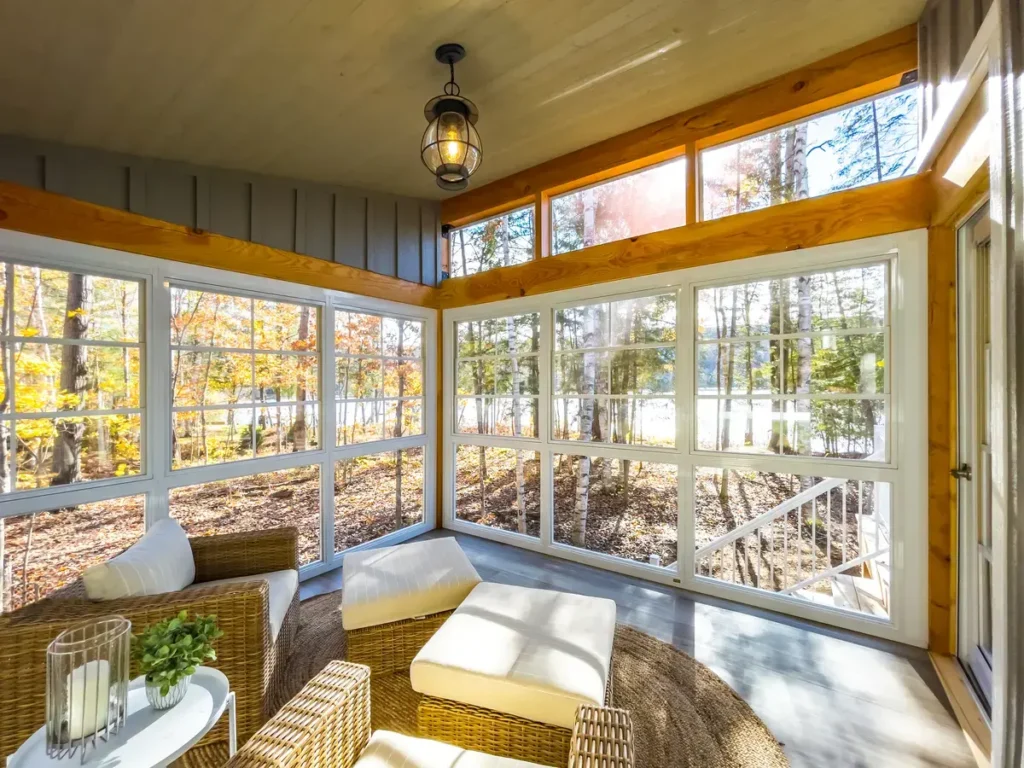
The difference between a sunroom enclosure and a sunroom addition is one of the most common questions we hear, yet it’s rarely explained clearly. While these two options are often grouped together, they are fundamentally different in design, performance, and function. As more Alberta homeowners expect their sunrooms to function as true year-round living spaces, understanding these differences becomes critical.
A sunroom enclosure can be an excellent solution for extending your outdoor season. However, it is not always a shortcut to adding fully livable square footage. Understanding the difference upfront helps you choose a space that actually meets your comfort expectations, usage goals, and long-term investment objectives.
A sunroom enclosure can be an excellent solution for extending your outdoor season. However, it is not always a shortcut to adding fully livable square footage. Understanding the difference upfront helps you choose a space that actually meets your comfort expectations, usage goals, and long-term investment objectives.
Table of Contents
- Sunroom Enclosure vs Sunroom Addition: What Is the Difference
-
The Truth About Sunroom Enclosures in Alberta Winters
- High-Performance Enclosures: The Sunspace Model 400
- Are Slight Water Leaks or Snow in My Sunroom Normal ?
- Should My Sunroom Roof Leak ?
- Can I Keep Plants in My Sunroom Year-Round ?
-
How to Choose Between a Sunroom Enclosure and a Sunroom Addition
- Fully Year-Round Living Space Requirements
- Extended Seasonal Use Goals
- Deck Extension and Weather Protection
- Budget and Installation Timeline Considerations
- Expectations for Sealing and Weather Performance
- Our Approach at HR2 Construction
- Frequently Asked Questions
Sunroom Enclosure vs Sunroom Addition: What Is the Difference
Understanding the difference between a sunroom enclosure and a sunroom addition can help you decide where to invest your money and what to expect from your space.
Sunroom Enclosure
A sunroom enclosure is typically a three- or four-season space that operates separately from your home’s conditioned interior. This means the enclosure is a thermally broken space with a wall and exterior door separating it from the rest of your home. These rooms can have their own heat source and, when designed and installed correctly by an experienced sunroom builder, remain comfortable for 8 to 10 months of the year.
However, sunroom enclosures are not considered fully livable during Alberta’s coldest winter months. While they are water-tight and weather-tight, they are not completely weatherproof. Under extreme conditions such as driving rain, high winds, or heavy snow accumulation, minor condensation, light snow infiltration, or small water traces may occur around windows or glass seals.
These occurrences are normal and do not indicate structural failure. Quality sunroom enclosures are built to withstand severe weather without sustaining damage. Nevertheless, they have performance limitations compared to fully integrated additions.
Sunroom Addition
A sunroom addition, conversely, represents a true extension of your home’s living space. Walls and doors between the addition and your existing interior are often removed to create seamless integration. The heating system connects directly to your home’s HVAC infrastructure, while walls, insulation, and glazing meet identical building code requirements as the rest of your home.
This construction approach ensures the space performs exactly like any other room in your home, maintaining consistent temperatures even during Alberta’s coldest winter days when outdoor temperatures drop to -30°C or -40°C.
In summary, a sunroom enclosure provides a bright, semi-outdoor space for most of the year, while a sunroom addition delivers fully livable, code-compliant, year-round square footage.
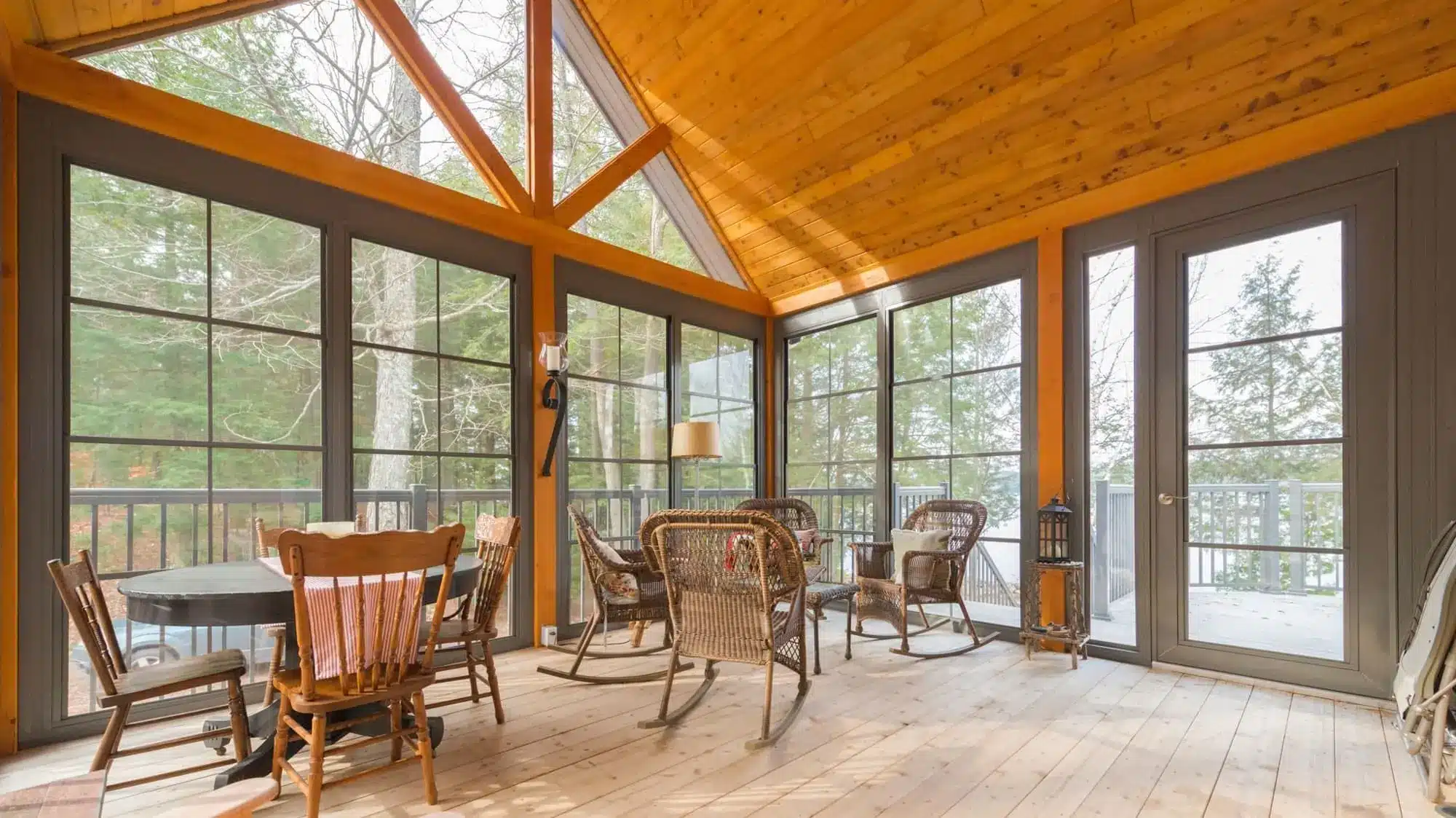
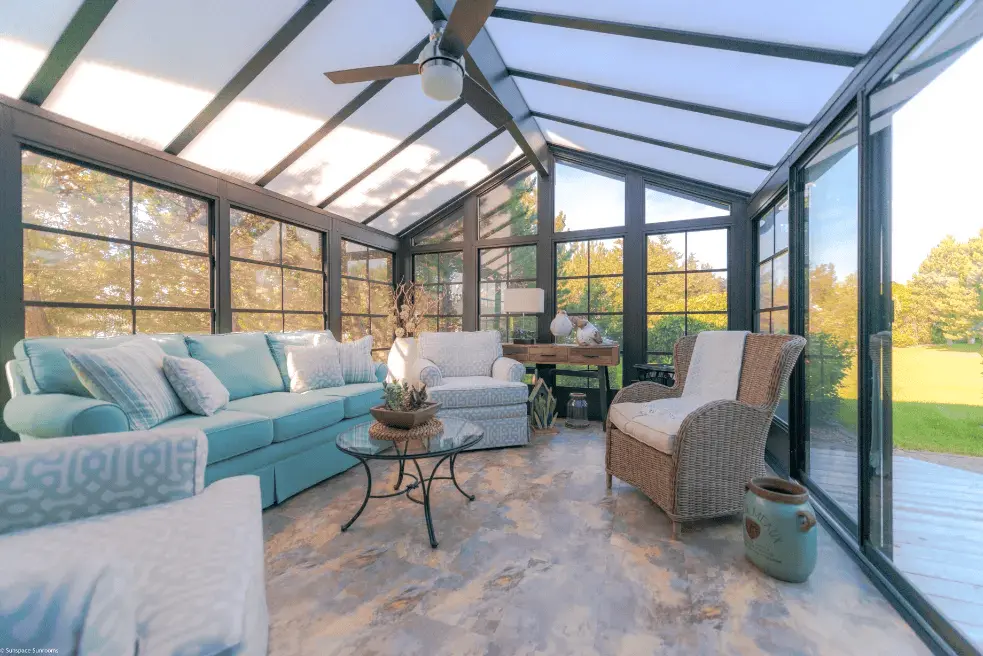
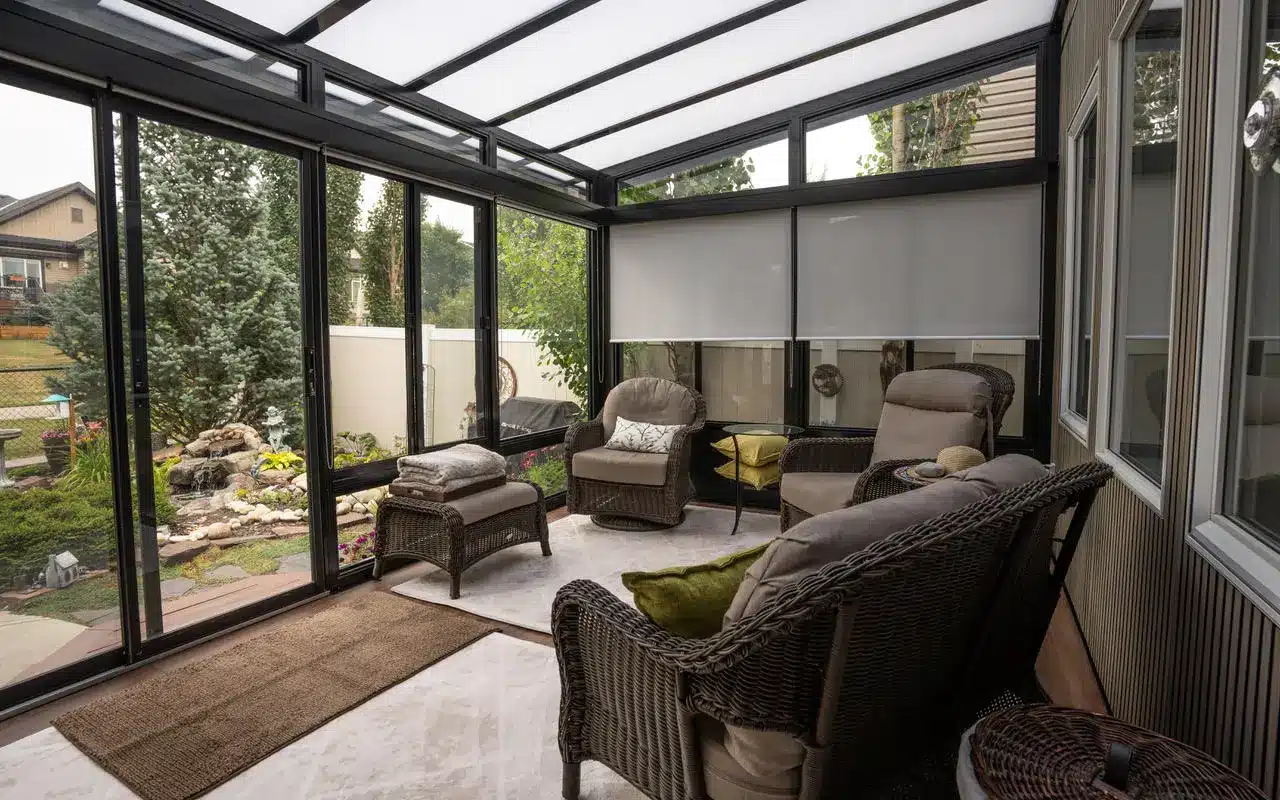
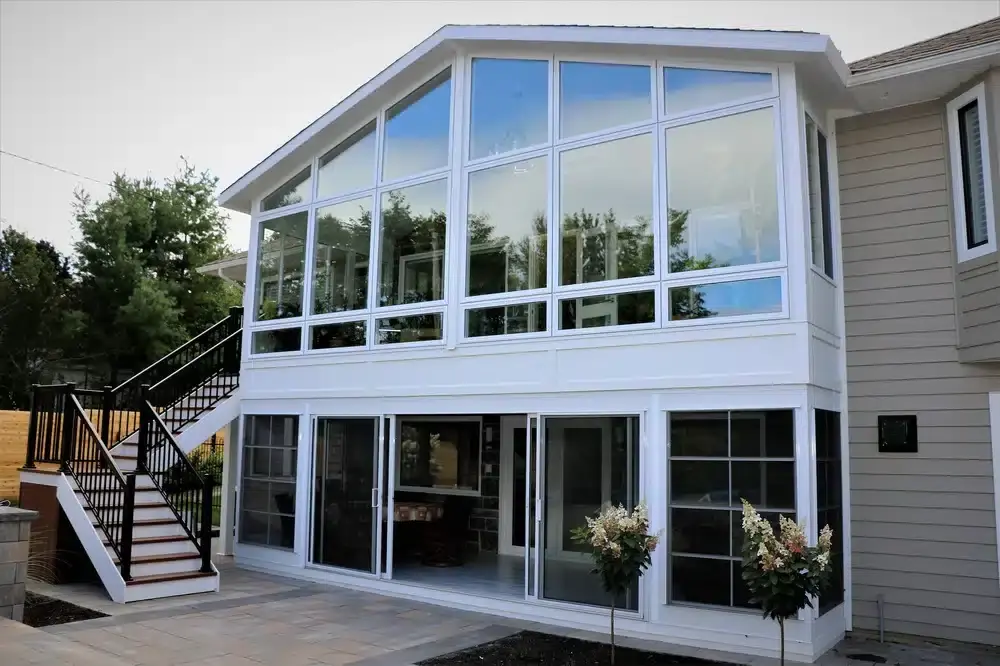
The Truth About Sunroom Enclosures in Alberta Winters
Alberta’s weather demands exceptional performance from any outdoor structure. Winters bring long periods of bitter cold and heavy snow, while summers swing from hot, sunny days to sudden storms. With temperatures ranging from -40°C in winter to over 30°C in summer, plus strong winds and rapid temperature fluctuations, your sunroom needs robust construction.
A three-season sunroom enclosure performs excellently during spring, summer, and fall, providing bright and comfortable space throughout these seasons. However, during the coldest winter weeks, even insulated models struggle to maintain the same warmth as your home’s interior without supplemental heating. Recognizing what a sunroom enclosure can and cannot do proves essential before making your investment decision.
This distinction becomes clearer when comparing a full sunroom addition. Built with proper insulation, integrated heating systems, and complete structural support meeting residential building codes, a sunroom addition functions as genuine year-round living space regardless of outdoor temperature extremes.
A three-season sunroom enclosure performs excellently during spring, summer, and fall, providing bright and comfortable space throughout these seasons. However, during the coldest winter weeks, even insulated models struggle to maintain the same warmth as your home’s interior without supplemental heating. Recognizing what a sunroom enclosure can and cannot do proves essential before making your investment decision.
This distinction becomes clearer when comparing a full sunroom addition. Built with proper insulation, integrated heating systems, and complete structural support meeting residential building codes, a sunroom addition functions as genuine year-round living space regardless of outdoor temperature extremes.
High-Performance Enclosures: The Sunspace Model 400
For homeowners considering a high-performance enclosure option, the Sunspace Model 400 Insulated Sunroom offers practical middle ground. This system features thermally broken construction, insulated floors and ceilings, and dual-pane Low-E argon gas glass windows designed specifically for Alberta’s extreme climate conditions.
When paired with an appropriate heat source, the Model 400 retains warmth efficiently, minimizes condensation formation, and remains comfortable during winter months. During summer, it reduces heat gain while maintaining the bright, open atmosphere sunrooms provide. The thermal breaks in aluminum extrusions and insulated wall panels significantly improve performance compared to standard enclosure models.
Realistically, a properly designed and installed Model 400 Sunroom enclosure can be enjoyed 8 to 10 or more months annually. However, it remains separate from your home’s conditioned space. If your goal includes a sunroom maintaining identical temperature to your home year-round, including Alberta’s coldest days, a full sunroom addition remains the appropriate solution.
When paired with an appropriate heat source, the Model 400 retains warmth efficiently, minimizes condensation formation, and remains comfortable during winter months. During summer, it reduces heat gain while maintaining the bright, open atmosphere sunrooms provide. The thermal breaks in aluminum extrusions and insulated wall panels significantly improve performance compared to standard enclosure models.
Realistically, a properly designed and installed Model 400 Sunroom enclosure can be enjoyed 8 to 10 or more months annually. However, it remains separate from your home’s conditioned space. If your goal includes a sunroom maintaining identical temperature to your home year-round, including Alberta’s coldest days, a full sunroom addition remains the appropriate solution.
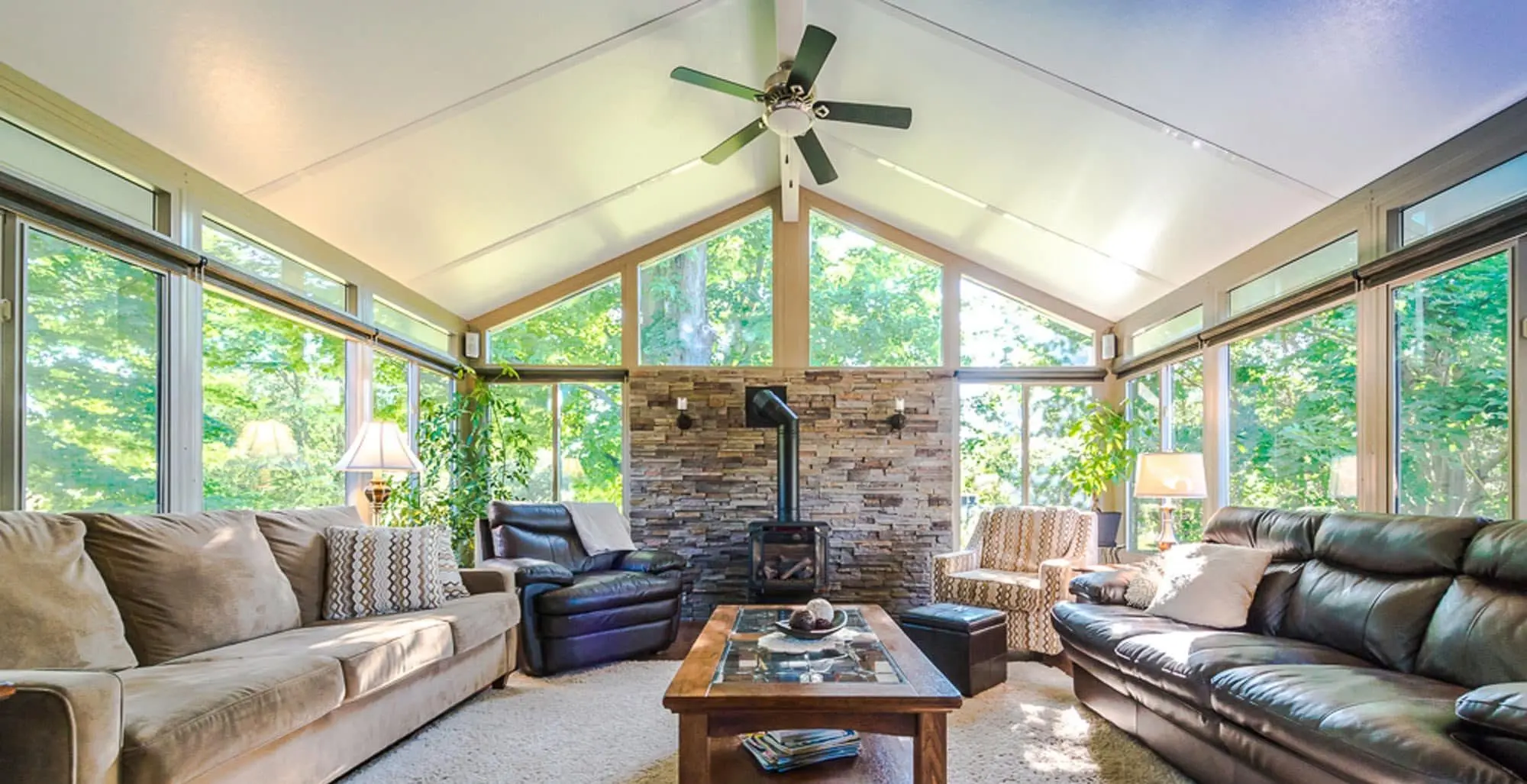
Are Slight Water Leaks or Snow in My Sunroom Normal ?
Minor water or snow infiltration can be normal under extreme weather conditions, though this occurs rarely in quality Sunspace sunrooms. Not all sunroom enclosures perform equally, and higher-quality systems from an experienced sunroom contractor demonstrate significantly better weather resistance than standard models.
Understanding that a sunroom enclosure is not a completely sealed unit like your home’s interior proves important. Even with thermally broken walls, properly installed roofs, and water-tight construction methods, Alberta’s severe weather occasionally allows small amounts of water or snow to accumulate around windows or glass during driving rain or wind-driven snow events.
This phenomenon is normal and does not indicate construction failure or defective installation. Quality sunroom builders can improve sealing if minor issues occur. However, if your goal requires a completely sealed, year-round space maintaining identical temperature to your home, a full sunroom addition meets those expectations more effectively.
High-quality sunroom enclosures are engineered to handle these conditions while still providing bright, comfortable, protected space for the majority of the year. They represent an excellent investment when expectations align with their intended seasonal performance characteristics.
Understanding that a sunroom enclosure is not a completely sealed unit like your home’s interior proves important. Even with thermally broken walls, properly installed roofs, and water-tight construction methods, Alberta’s severe weather occasionally allows small amounts of water or snow to accumulate around windows or glass during driving rain or wind-driven snow events.
This phenomenon is normal and does not indicate construction failure or defective installation. Quality sunroom builders can improve sealing if minor issues occur. However, if your goal requires a completely sealed, year-round space maintaining identical temperature to your home, a full sunroom addition meets those expectations more effectively.
High-quality sunroom enclosures are engineered to handle these conditions while still providing bright, comfortable, protected space for the majority of the year. They represent an excellent investment when expectations align with their intended seasonal performance characteristics.
Should My Sunroom Roof Leak ?
No, your sunroom roof should never leak. Additionally, you should never experience water running down your home’s exterior wall inside the sunroom. These issues indicate installation problems rather than normal performance limitations.
Unlike some competitors who simply bolt through siding or rely on adhesives and silicones for water management, at HR2 Construction, we integrate Sunspace sunroom roofs fully into your home’s structure. We carefully remove exterior finishes, install the roof system properly, then add aluminum drip edges and flashing to ensure appropriate water management.
This installation method prevents water entry into your sunroom even during Alberta’s most extreme weather events. Furthermore, Sunspace roofs utilize a pressure cap system that improves performance and longevity by effectively handling temperature changes, snow loads, and heavy rainfall.
With our construction approach, your sunroom roof is built to last and keep your space dry, comfortable, and worry-free throughout all seasons. Proper installation by qualified sunroom contractors makes a significant difference in long-term performance and satisfaction.
Unlike some competitors who simply bolt through siding or rely on adhesives and silicones for water management, at HR2 Construction, we integrate Sunspace sunroom roofs fully into your home’s structure. We carefully remove exterior finishes, install the roof system properly, then add aluminum drip edges and flashing to ensure appropriate water management.
This installation method prevents water entry into your sunroom even during Alberta’s most extreme weather events. Furthermore, Sunspace roofs utilize a pressure cap system that improves performance and longevity by effectively handling temperature changes, snow loads, and heavy rainfall.
With our construction approach, your sunroom roof is built to last and keep your space dry, comfortable, and worry-free throughout all seasons. Proper installation by qualified sunroom contractors makes a significant difference in long-term performance and satisfaction.
Can I Keep Plants in My Sunroom Year-Round ?
Many homeowners envision using their sunroom as a greenhouse or indoor garden space, maintaining tropical and delicate plants year-round to create a green, vibrant atmosphere. This goal is achievable but requires understanding certain important considerations.
You can keep plants in your sunroom enclosure year-round with proper planning. However, since a sunroom enclosure is not a fully conditioned space like your home’s interior, temperatures can drop below freezing during winter without supplemental heating. To maintain plant health and survival during Alberta’s cold months, you must provide heating and monitor conditions carefully.
If your goal includes maintaining consistent temperatures of 10°C or higher year-round, this remains possible in a high-quality insulated sunroom enclosure with adequate heating. However, maintaining these conditions requires energy consumption to sustain appropriate temperature levels throughout winter.
You can keep plants in your sunroom enclosure year-round with proper planning. However, since a sunroom enclosure is not a fully conditioned space like your home’s interior, temperatures can drop below freezing during winter without supplemental heating. To maintain plant health and survival during Alberta’s cold months, you must provide heating and monitor conditions carefully.
If your goal includes maintaining consistent temperatures of 10°C or higher year-round, this remains possible in a high-quality insulated sunroom enclosure with adequate heating. However, maintaining these conditions requires energy consumption to sustain appropriate temperature levels throughout winter.
A sunroom addition, integrated into your home’s heating system, makes maintaining warm temperatures for plants easier and more energy-efficient throughout the entire year. The choice depends on your commitment to providing supplemental heat and monitoring conditions versus having an automatically regulated environment.
A sunroom addition, integrated into your home’s heating system, makes maintaining warm temperatures for plants easier and more energy-efficient throughout the entire year. The choice depends on your commitment to providing supplemental heat and monitoring conditions versus having an automatically regulated environment.
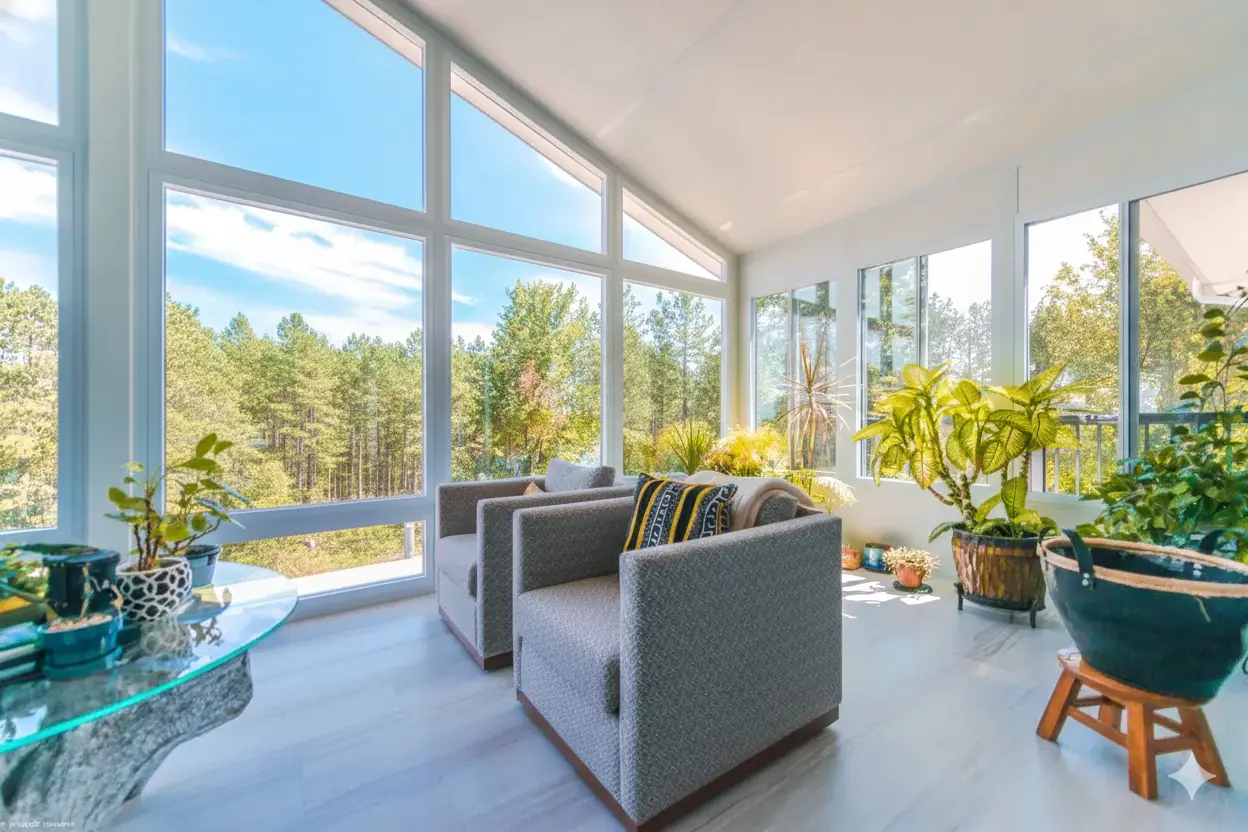
How to Choose Between a Sunroom Enclosure and a Sunroom Addition
Deciding between a sunroom enclosure and a sunroom addition requires evaluating your specific goals, comfort expectations, and intended usage patterns. Several key factors help clarify which option best serves your needs.
Fully Year-Round Living Space Requirements
If you require a sunroom maintaining identical temperature to your home throughout Alberta’s coldest winter days, a sunroom addition represents the appropriate choice. It integrates fully into your home’s heating system, features insulation meeting building code requirements, and performs identically to any other room in your house.
Extended Seasonal Use Goals
If your goal centers on creating a bright, comfortable space for most of the year including spring, summer, fall, and portions of winter, a high-performance sunroom enclosure may prove ideal. With insulated floors, ceilings, walls, plus supplemental heating, quality enclosures provide enjoyment 8 to 10 or more months annually while maintaining energy efficiency.
Deck Extension and Weather Protection
If you primarily seek protection from wind, rain, bugs, and snow to make your deck usable more frequently, a three- or four-season sunroom enclosure provides an excellent solution. It shields you from weather elements, allowing outdoor space enjoyment during less-than-ideal conditions throughout spring, summer, and fall.
Budget and Installation Timeline Considerations
Enclosures typically cost less than additions and can be installed more quickly with less disruption. Additions require more extensive planning, longer construction timelines, and higher investment. However, additions deliver fully livable square footage that may increase home value more substantially than enclosures.
Expectations for Sealing and Weather Performance
Remember that a sunroom enclosure is not a completely sealed unit.
Minor snow or water around windows during extreme weather represents normal performance rather than defects. If you require a space performing exactly like your home under all conditions, a sunroom addition better meets that expectation.
By clearly defining your goals, budget parameters, and performance expectations, you can select the solution fitting your lifestyle and Alberta’s climate conditions. This ensures your investment creates a space you will genuinely enjoy year after year.
By clearly defining your goals, budget parameters, and performance expectations, you can select the solution fitting your lifestyle and Alberta’s climate conditions. This ensures your investment creates a space you will genuinely enjoy year after year.
Our Approach at HR2 Construction
We design and build both sunroom enclosures and full sunroom additions across Alberta. Our priority involves understanding your specific goals, expectations, and intended space usage before recommending solutions.
By defining these factors upfront through detailed consultation, we ensure your sunroom proves not only beautiful and functional but genuinely exceeds your needs, creating a space you will love and enjoy for many years.
By defining these factors upfront through detailed consultation, we ensure your sunroom proves not only beautiful and functional but genuinely exceeds your needs, creating a space you will love and enjoy for many years.
Frequently Asked Questions
What is the main difference between a sunroom enclosure and a sunroom addition?
A sunroom enclosure operates separately from your home’s conditioned space with its own thermal envelope and heating source, providing comfortable use for 8 to 10 months annually. A sunroom addition integrates fully into your home with connected HVAC, code-compliant insulation, and year-round livability identical to other interior rooms. Enclosures offer extended seasonal use at lower cost, while additions provide true year-round living space meeting residential building codes.
Can a sunroom enclosure be used during Alberta winters?
High-performance insulated sunroom enclosures like the Sunspace Model 400 can be used during portions of Alberta winters with supplemental heating. However, during extreme cold periods when temperatures drop to -30°C or -40°C, maintaining interior warmth comparable to your home requires significant heating energy. Most enclosures perform best during milder winter periods and excel during spring, summer, and fall seasons.
Is minor snow or water infiltration normal in a sunroom enclosure?
Minor snow or water around windows during extreme weather events like driving rain or wind-driven snow can be normal in sunroom enclosures. Quality enclosures are weather-tight but not completely weatherproof like your home’s interior. These occurrences do not indicate construction failure. If you require completely sealed performance under all conditions, a sunroom addition better meets those expectations.
How much does a sunroom enclosure cost compared to a sunroom addition?
Sunroom enclosures typically cost less than full additions because they require less extensive construction, simpler foundation work, and faster installation timelines. Additions involve removing walls, integrating HVAC systems, meeting full building code requirements, and longer construction periods, resulting in higher investment. However, additions deliver year-round livable square footage that may provide greater long-term value depending on your goals.
Will a sunroom enclosure increase my home's value?
A quality sunroom enclosure can increase your home’s appeal and market value by extending usable outdoor space and improving aesthetics. However, because enclosures are not considered fully livable year-round square footage, they typically add less value than sunroom additions. The actual value increase depends on local market conditions, construction quality, and buyer preferences in your specific Alberta region.
Do I need a building permit for a sunroom enclosure or addition in Alberta?
Yes, most municipalities in Alberta require building permits for both sunroom enclosures and additions. Permit requirements vary by city and regional district, so checking with your local building department ensures compliance. Working with an experienced sunroom contractor familiar with local regulations helps navigate the permitting process efficiently and ensures your project meets all applicable building codes.