At HR2 Construction, we have observed a clear evolution in what Alberta homeowners request for their sunroom projects. Winter is the ideal time to begin planning these upgrades, as lead times for materials and contractor availability typically extend three to four months into spring construction season.
Table of Contents
- Why Alberta Homeowners Are Rethinking Sunroom Design in 2026
- Hybrid Glass and Wood Structures Lead Alberta Sunroom Preferences
- Next-Generation Insulation Technologies Transform Winter Comfort
- Sunroom Wellness Spaces Meet Growing Homeowner Demand
- Smart Home Integration Optimizes Sunroom Comfort and Efficiency
- Popular Calgary Style Preferences Shape Regional Design Direction
- Durable Materials Essential for Alberta's Harsh Winter Conditions
- Planning Your 2026 Sunroom Project This Winter
- Frequently Asked Questions
Why Alberta Homeowners Are Rethinking Sunroom Design in 2026
Energy costs across Alberta have risen consistently over recent years. Consequently, homeowners now prioritize thermal efficiency alongside aesthetic appeal. Modern sunroom designs address both requirements through strategic material selection and technology integration.
Building code updates in Alberta municipalities have also influenced design trends. Many jurisdictions now require higher insulation values for year-round enclosed spaces, which drives innovation in window systems and structural materials.
Hybrid Glass and Wood Structures Lead Alberta Sunroom Preferences
Wood elements provide natural insulation properties that metal frames cannot match. Cedar and pressure-treated lumber remain popular choices for their durability in Alberta’s freeze-thaw cycles. These materials withstand moisture fluctuations without warping or degrading over typical 20 to 30 year lifespans.
Glass selection in hybrid designs typically includes tempered or laminated options for safety and durability. Large glass panels maximize natural light exposure during Alberta’s shorter winter days, when daylight may last only seven to eight hours in December and January.
The hybrid approach also allows for customization based on specific property orientations. South-facing walls can feature maximum glass coverage for passive solar heating, while north-facing sections incorporate more wood framing for additional insulation.
Next-Generation Insulation Technologies Transform Winter Comfort
Thermal films applied to existing or new glass surfaces provide an additional insulation layer without replacing entire window systems. These films block up to 99 percent of ultraviolet radiation, which protects furniture and flooring from sun damage while improving year-round temperature control.
Insulated roof panels with R-values between 30 and 40 are now standard in our Alberta sunroom projects. These panels maintain comfortable interior temperatures even during extended cold snaps common across the province in January and February.
Sunroom Wellness Spaces Meet Growing Homeowner Demand
We consistently see requests for yoga and stretching areas within sunroom designs. These zones require minimum dimensions of approximately 2.5 by 2.5 meters per person, with ceiling heights of at least 2.4 meters to accommodate standing poses and arm extensions.
Indoor plant displays thrive in sunroom environments due to abundant natural light and temperature control. Popular choices for Alberta conditions include pothos, snake plants, and peace lilies, which tolerate varying light levels and require moderate maintenance.
Reading nooks with built-in shelving and comfortable seating create year-round relaxation zones. These areas benefit from strategic placement near south or west-facing windows, where natural afternoon light reduces the need for artificial lighting during shorter winter days.


Sunroom Wellness Spaces Meet Growing Homeowner Demand
We consistently see requests for yoga and stretching areas within sunroom designs. These zones require minimum dimensions of approximately 2.5 by 2.5 meters per person, with ceiling heights of at least 2.4 meters to accommodate standing poses and arm extensions.
Indoor plant displays thrive in sunroom environments due to abundant natural light and temperature control. Popular choices for Alberta conditions include pothos, snake plants, and peace lilies, which tolerate varying light levels and require moderate maintenance.
Reading nooks with built-in shelving and comfortable seating create year-round relaxation zones. These areas benefit from strategic placement near south or west-facing windows, where natural afternoon light reduces the need for artificial lighting during shorter winter days.
Wellness-focused sunroom designs often include dedicated spaces for hobbies such as painting, crafting, or journaling. These activities benefit from consistent natural lighting that sunroom environments provide throughout the year.
Smart Home Integration Optimizes Sunroom Comfort and Efficiency
Popular Calgary Style Preferences Shape Regional Design Direction
Rustic-chic sunroom designs combine reclaimed wood elements with modern glass systems to create spaces that feel both cozy and contemporary. This style remains highly popular across Calgary, Airdrie, and Cochrane, where homeowners appreciate the blend of mountain aesthetic with urban sophistication.
Modern minimalism emphasizes clean lines, neutral colour palettes, and uncluttered spaces that maximize natural light penetration. This approach works particularly well for smaller urban properties where visual expansion creates the perception of larger square footage.
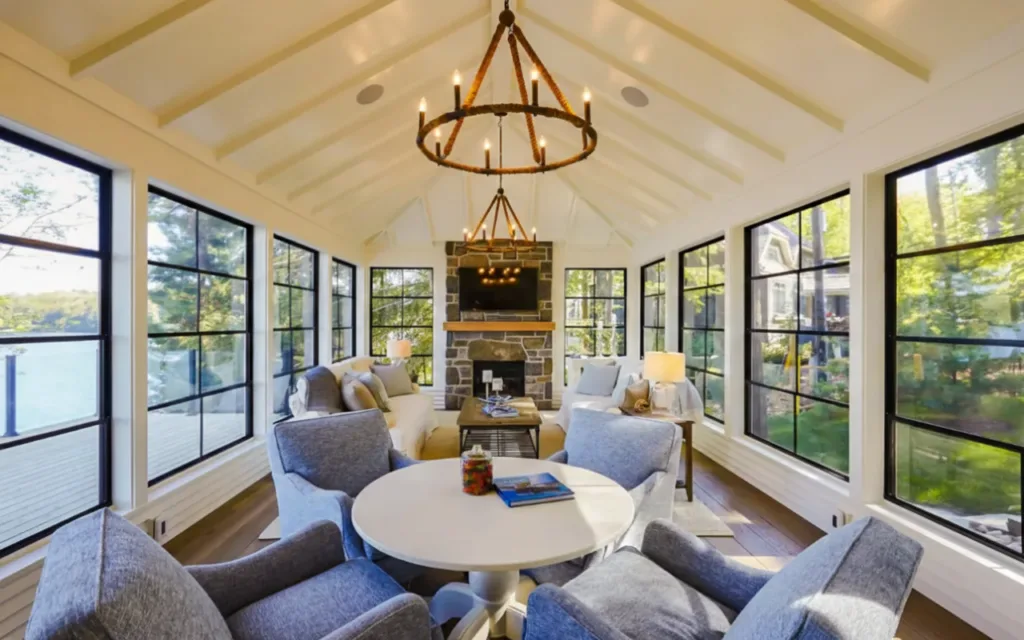
Black-framed windows and doors have emerged as the dominant colour choice for contemporary sunroom designs in 2026. These frames provide striking visual contrast against lighter interior walls while maintaining durability through powder-coated aluminum or steel construction.
Mixed-material approaches incorporating stone, wood, and metal elements create visual interest without overwhelming sunroom spaces. These designs typically feature stone accent walls, wood ceiling treatments, and metal-framed glass systems working together cohesively.
Durable Materials Essential for Alberta's Harsh Winter Conditions
Powder-coated aluminum framing resists corrosion from road salt and moisture exposure better than painted steel alternatives. This material maintains structural integrity and appearance through typical 25 to 30 year lifespans with minimal maintenance requirements.
Composite decking materials withstand freeze-thaw cycles without cracking, warping, or splintering like traditional wood options. These products require no annual staining or sealing, which reduces long-term maintenance costs and time commitments.
Weather-resistant door hardware rated for exterior use prevents lock freezing and ensures reliable operation throughout winter months. We install hardware with temperature ratings down to minus 40 degrees Celsius, matching Alberta’s most extreme winter conditions.
Structural fasteners and connections must meet or exceed local building code requirements for wind and snow load resistance. Alberta building codes typically require designs capable of supporting snow loads between 30 and 40 pounds per square foot depending on specific municipal requirements.
Planning Your 2026 Sunroom Project This Winter
Municipal permits for sunroom additions in Alberta generally require 4 to 8 weeks for approval. Applications submitted during winter months often process more quickly due to lower seasonal demand on permitting departments.
Site preparation considerations include excavation timing, foundation requirements, and utility connections. Winter planning allows for ground preparation as soon as spring thaw occurs, typically in late March or early April across most Alberta regions.